The choices we make for our kids’ education will have a lasting impact, and finding what truly works for each unique child is crucial. Living in a world where we are subject to constant judgement thanks to social media can make it difficult to tune in to those needs, especially if you are feeling like you might need something outside of “the norm.” That’s why I’m excited to share this post with you, especially if you’ve been exploring different alternative education options for your family. Whether you’re considering homeschooling in Northern Virginia or Northern Virginia private schools, this post offers valuable insights into the different paths available to us as parents.
I work with thousands of children every year in my roles as a school photographer, a family photographer, a substitute elementary school teacher, and a mom. Let me tell you: there is no one-size-fits-all answer to this question, and we’re so lucky to live in an area where those options are embraced.
In this post, educational consultant (and former public school teacher) Jenna Myers dives into the variety of school choices available today, from public schools and private options to hybrid schools, microschools, and homeschool Northern Virginia. If you’ve been wondering which choice might be the best fit for your child, Jenna’s expert advice will guide you through the process of evaluating your options, understanding their benefits, and making the best decision for your family. Let’s dive in and explore the world of alternative education and how it can work for your child’s unique needs!
Table of Contents
Options in Educating Your Child
Once upon a time, you just went to your neighborhood school and called it a day. But those were also the times when neighborhoods were smaller, everyone knew each other, people stayed in one area of the long haul, and learning differences weren’t typically recognized. Alternative educational options, such as private schools, have existed for some time but homeschooling has only been legal since the 80’s in the United States. Then technology and the era of Covid and the landscape of education has pivoted once again.
So what are the options today and why do people choose them?
Public School
Public school is still the choice the majority of families choose to educate their children. There are huge benefits to public school, such as cost, creating ties in the community in which you reside, special education services, school events and activities, and of course accessibility. I had the privilege of teaching in the public school setting for many years and poured my heart and soul into each student which entered my room, and I know so many wonderful teachers who continue to do the same today. It is not, however, the right fit for every child. So, what are the alternative education options in the Northern Virginia area when it comes to school choice?
Private Schools, Hybrid Schools, and Microschools
Northern Virginia Private Schools
Private schools are littered throughout the Northern Virginia area, some with religious components but there are a few which do not require you to subscribe to a particular statement of faith. Northern Virginia private schools are typically solid options if you would like smaller class sizes. They tend to utilize uniforms and while this is another financial aspect, it can make daily logistics a breeze.
Most of the time Parents’ voices are heard in a private setting, as they want to keep their “clients” happy. There can be a religious component, which is a huge draw for many families. The calendar schedule is also a draw for many families as the breaks are bulked into summer, winter, and spring break. There are days off for students scattered throughout the school year.
Hybrid Schools
Our area offers a couple of hybrid options as well. These do not meet on a traditional five-day schedule, instead they meet for two to three days in person and then the other days are spent working at home with parents. This schedule appeals to families who want a more hands-on approach to their child’s education and who also may enjoy flexibility in schedule to travel, take field trips, or just spend more time together. Tuition in our area for full-time private school begins at $10,000 per student and climbs from there, while the cost is typically under $6,000 per student each year for a hybrid school. Most private schools do offer opportunities to apply for financial aid.
Note: some hybrid schools are accredited, but others are not. It is important to research those details.

Microschools
Recently, microschools have entered the landscape. One just popped up in Loudoun County this year in fact! These schools typically have curriculum they have handpicked but offer flexibility in those choices and tailor academics to each individual student. Classes or pods are small, averaging three to eight students per age range. They may group two grade levels together depending on topic and ability levels.
The price range varies based on hours (are you looking for a half day program or full day? Five days a week or three?), group size, and student needs. A microschool can be a particularly beneficial option for special needs children, if the teachers have experience and certifications in the appropriate areas. Most microschools will fall under the Certified Tutor Law in Virginia or homeschool law.
Which Is Right For My Child?
If you are considering one of the above options, there are a few questions you should ask while interviewing schools:
- Is your school accredited? If not, are you seeking accreditation? Do you operate under the certified tutor law or homeschooling law?
- Are teachers certified? Do any of the teachers have any additional training in specialized areas? For example: are they certified in Orton Gillingham ABA therapy, or other specialized programs?
- Do you provide on going professional development for your teachers (for microschools: do you continue to grow academically through conferences, coursework, or educational articles?)
- How do communicate success and roadblocks with parents?
- How can we work as a team to ensure academic success for my child?
- What curriculum does your school use? Why did you make this choice?
These questions provide a solid foundation when interviewing schools.

Homeschooling
Homeschooling in Northern Virginia is a legitimate educational choice, but not all choose homeschooling the same reasons. As an educational consultant, I have worked with families who chose homeschooling for a variety of reasons, including:
- Freedom to choose curriculum and methods of teaching that jive with their child’s learning ability
- Bullying or harassment issues in their current school setting
- Additional time as a family at home or to travel and explore the world around us
- Ability to spend more time outdoors and out of desks
- To limit technology usage
- Concerns with school safety
- Special education needs
- Ability to incorporate religion
- Lack of faith in the current education system
- Wanting to have an active role in their child’s education
This is just a small sampling of what I hear from parents each year and the list is evolving. It used to be that most homeschoolers were religious, but that is no longer the case. Northern Virginia homeschool families are diverse, with unique needs and goals for their children’s education.
As a former public school teacher, and attendee of both private and public schools throughout my own educational journey, I can attest to the fact that I had preconceived notions of what homeschooling was and who homeschoolers were. I, however, have learned that I was way off base.
Northern Virginia homeschooling has changed in a myriad of ways over the past twenty years, but Covid spurred even bigger changes. I am sure many of you are now picturing Little House on the Prairie outfits, around a table, and twelve children, but the truth is I have clients who homeschool one child or four. You may choose to homeschool for a year and reenter a traditional setting, or several years (or for your child’s entire education). I have clients who choose to homeschool one child and send others to public or private school. Some decide to do so for just elementary or just middle school.
Many, but not all, will choose public or private homeschool, while others homeschool in high school and may also choose dual enrollment options (the sheer number of opportunities for dual enrollment at this time is astonishing). You can homeschool using textbooks, unit studies, live or self-paced courses online, or co-op classes.
We are so blessed in Northern Virginia to have a large homeschooling community with a multitude of secular and religious co-ops, programs in our libraries and museums geared toward homeschoolers, and local businesses who offer sports, chess, robotics, art, and music during daytime hours to homeschooling families. You can truly cherry pick what will work for your child academically.
I should probably mention socialization here, because this is, quite frankly, the number one question about homeschooling. You can learn to interact with others in a variety of ways: sports, clubs, teams, church, in your neighborhood, while running errands, co-op classes, field trips, park dates, family time, scouts, and many other opportunities.
As a former classroom teacher I will tell you, just because a child is with other children of the same age, day after day, does not mean they know how to properly interact with others, make and hold friendships, or do not feel lonely. Just as an adult can go into an office daily and walk away without feeling connections, the same can be said for traditional school settings. Having said that, homeschool parents do have to allow opportunities for their children to be engaged in the world around them, but, as you can see from the above list, it is not nearly as difficult as you may have been lead to believe.
Non-negotiable for homeschooling: you have to follow the law. If you homeschool your child, you typically file something called a Notice of Intent. You submit a copy of your diploma or degree, a list of subjects, and a few other tidbits of information. You also must provide proof of academic progress at the end of each school year. This can look like a standardized which is nationally normed, a portfolio review, or an evaluation. When you decide to homeschool you agree to submit the aforementioned paperwork and adhere to the law. You are also agreeing to educate your child yourself (and consistently).
Since I addressed the cost of other types of schooling, I felt it was important to address this for homeschooling. The truth is you can spend as little as a few hundred dollars, to many thousands. This depends on the curriculum and activities you choose. You would need to decide on a budget. There is also the factor or parent work hours. I have many clients where both parents work, but they may be able to make their own owners, rotate shifts, have grandparents help, or outsource with co-ops and classes.
Whole Child
We live in a time where we can choose an educational choice that benefits the whole child. We can consider academics, emotional and social well-being, and physical needs. There is no perfect answer when it comes to educating your child. There are many excellent choices, you just have to reflect on what is best for their long term academic success, emotional and mental stability, and general life experience. Whether you choose Northern Virginia private schools, homeschooling in Northern Virginia, or another alternative education option, the key is finding the best fit for your child’s needs and your family’s lifestyle.
Alternative Education: Your Options for a Stronger Learning Experience
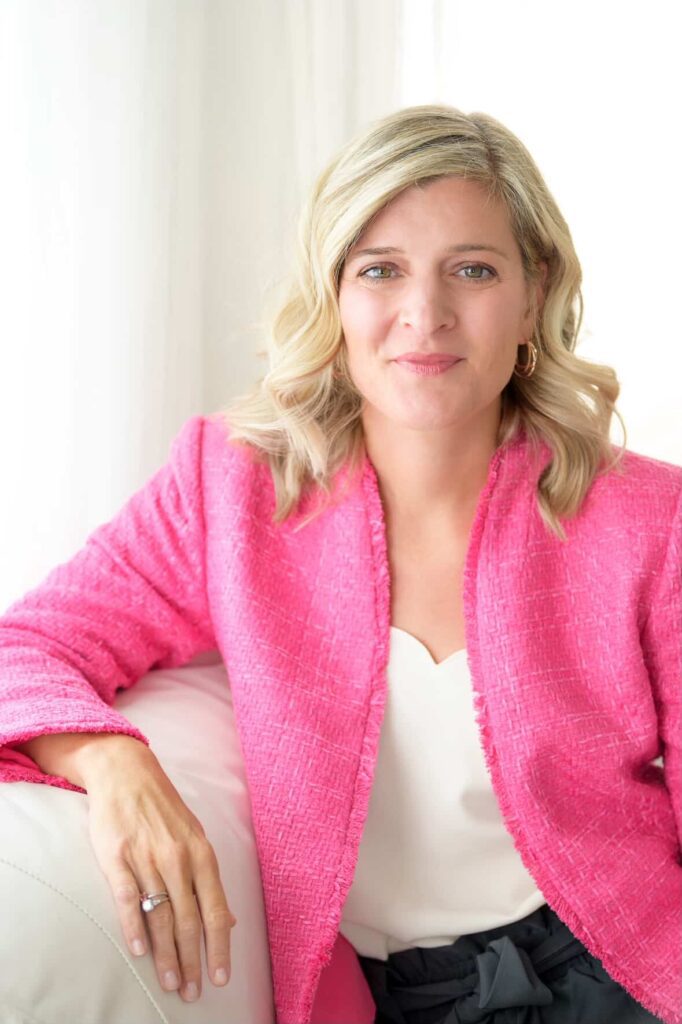
Jenna Myers
Owner – The Sophisticated Teacher, LLC www.thesophisticatedteacher.com
Jenna is a former public school teacher, turned educational consultant. She is passionate about education and ensuring each child is given the opportunity to succeed to the best of their ability.
Jenna taught public school at the elementary level in both Fairfax and Loudoun County Public Schools as a classroom teacher and later joining the administrative team as a School Based Technology Specialist. She holds an active teaching license with four endorsements: pre-kindergarten through sixth grade general education, instructional technology, social science for grades sixth through eighth, and English language learner’s kindergarten through twelfth grade. I have additional certifications as an IEW instructor, Responsive Classroom instructor, and Orton Gillingham.
In addition to dedicating her life to the world of education, Jenna is a wife, a mom to three boys, one dog, and two cats.