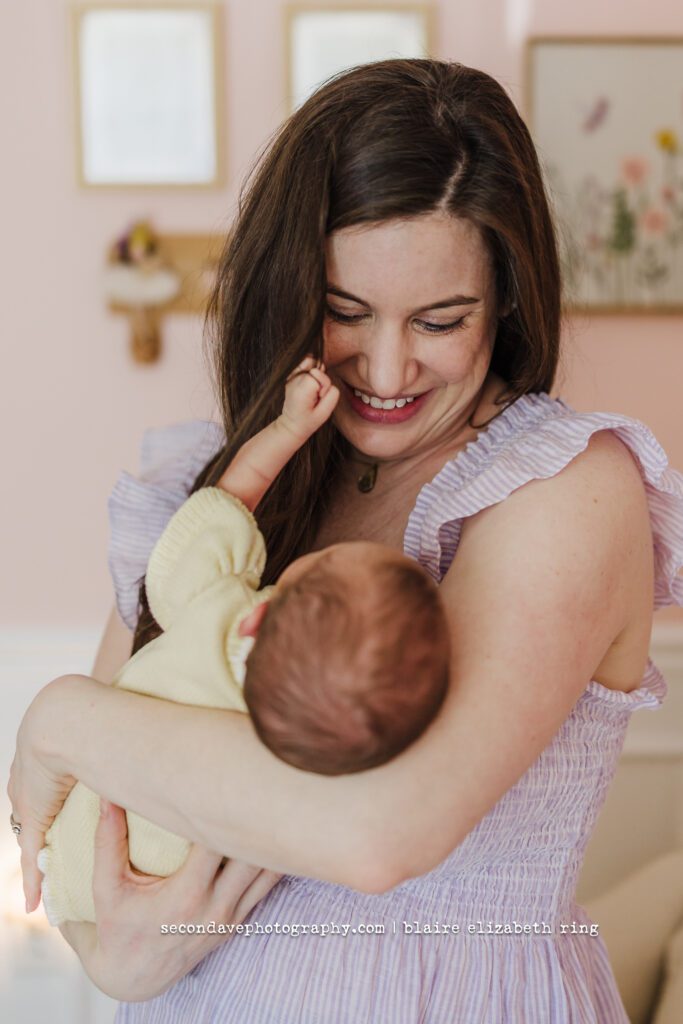
Learning how to feed Baby is one of the most personal, emotional parts of new parenthood, and also one of the most overwhelming.
Thinking back to my own experiences. My first daughter was born 7 weeks premature, and for a variety of reasons we were never able to breastfeed. I pumped exclusively for her for weeks until we switched to a special preemie formula to help her gain weight. With my second, I was determined to breastfeed exclusively, which we did for 14 months. And that was amazing until I realized she would not take a pacifier or bottle (imposter nipple!) under ANY circumstances.
At the time, this seemed like a polarizing topic in the community around me and I didn’t know where I could turn for support…if anywhere. That’s why I’m so excited to share this guest post from Candy Baracat-Donovan, a postpartum doula, certified lactation counselor, and co-founder of Like A Sister.
With World Breastfeeding Week on everyone’s radar, it’s the perfect time to reflect on how we support all parents in their feeding journeys. Candy reminds us that while nursing deserves celebration, so do the many other valid and beautiful ways families feed and bond with their babies.
Candy brings warmth, wisdom, and a truly inclusive approach to one of the most common (and commonly stressful) parenting questions: how to feed my baby. Whether you’re planning to breastfeed, bottle feed, combo feed, or you’re still figuring it all out, Candy’s honest and compassionate guidance meets you exactly where you are.
If you’ve ever felt left out of the typical baby feeding conversations, or just wish someone would tell you the full story without pressure or guilt, you’re going to want to read this.
Table of Contents


Every year, as World Breastfeeding Week rolls around, I find myself—both as a mom and a lactation professional—holding two truths at once:
First, breastfeeding and chestfeeding deserve celebration, access, and ongoing lactation support. These ways of feeding baby are biologically incredible, emotionally meaningful for many, and often under-resourced.
Second, this week can feel alienating for many parents. If you’ve struggled with how to feed baby, chose formula from day one, or felt like your family didn’t fit the narrow images we see promoted this time of year—you’re not alone.
But here’s the good news: it doesn’t have to feel that way.
There is inclusive baby feeding education out there—practical, evidence-based, compassionate information about how to feed baby in the way that’s best for your family. Whether you’re breastfeeding, combo feeding, or using formula, you deserve education and lactation support that honors your experience.

Families Look Different. So Should Feeding Support.
As a postpartum doula and lactation counselor, I work with families across the spectrum:
- Partners figuring out how to divide nighttime feedings fairly
- Same-sex parents learning to co-feed and navigating shared lactation support
- Solo parents balancing every piece of the puzzle
- Families who had their hearts set on exclusive breastfeeding but are now using formula
- Parents who combo feed on purpose—and parents who combo feed because nothing else has
- worked
- Families with almost any combination of unique circumstances you can imagine
What all of these families have in common is the desire to care deeply and well for their baby. And that
is what deserves to be celebrated, every week of the year with nonjudgmental guidance and affirming lactation support.

Education, Not Judgment
I’m a mom of three kids now, but when I was prepping for my first baby, my husband and I did what we
thought was best – we took a feeding class at our local medical center. While we got some good
information from it, once we were home with our newborn, we realized how many topics hadn’t been
covered.
Where was I supposed to learn how to pump? I suspected my baby had a tongue tie – but I hadn’t
learned anything about those. When (and how) were we supposed to introduce a bottle?
Years later, when I became a provider for new families myself, I set out to answer all those questions,
and more. Now, I tell my clients: one of the best things you can do before baby arrives (or right now, if
baby is already here) is to get clear, compassionate information about all your feeding options, not just
the one you’re hoping will go perfectly.


In my baby feeding class, and when I’m working one on one with new parents, I always start with the same message: It’s okay to have a goal. It’s also okay if your baby has other plans.
You deserve to hear that same message! If I was sitting on your couch with you, or across the table at
your favorite local coffee shop, I’d hold your hand and suggest you look for resources that teach you:
- What’s happening in your body (and your baby’s) in those early hours and days
- How milk production works (sidenote: this is important to understand no matter how you plan to feed)
- How to get started with breast/chestfeeding, formula, or both
- What tools can help (and which ones might just be clutter)
- What’s normal when it comes to newborn sleep and how feeding ties in
- How to protect your mental health during this season
- And how to build a realistic, equitable plan for sharing the load with a partner…especially overnight
Feeding your baby isn’t just a physical act. It’s an emotional, relational, and logistical one, too. And no matter your family structure, your feeding journey should work for you. You deserve lactation support that covers the full picture—not just a one-size-fits-all plan.


Feeding Is Connection
You can bond with your baby while breastfeeding.
You can bond with your baby while bottle feeding.
You can bond with your baby while pumping, combo feeding, supplementing, or doing a little bit of
everything.
There is no single right way. There is only the way that works for you and your family, and you deserve
to be supported by solid information and a plan that allows for flexibility, compassion, and rest.
There is only the way that works for your baby and your mental health. And you should never have to navigate that alone. As a lactation counselor, I work with families to uncover their right answer—not mine, not Instagram’s.
That’s what real lactation support looks like.


As You Prepare…
If you’re an expecting parent or newly postpartum, I encourage you to explore baby feeding support
that centers your whole story, not just one idealized version of it. Make space for learning, for asking
questions, and for changing your mind. Consider the following:
- Do they respect and affirm all feeding choices, not just breastfeeding?
- Do they have experience working with LGBTQIA+ parents, solo parents, adoptive families, or those with medical complications?
- Will they walk with you, not talk at you?
- Are they trained to support all methods of how to feed my baby, including pumping and formula?
If the answer is yes, you’ve found the right lactation counselor for you. And know that you’re not alone. Whatever your feeding journey looks like, there’s a community of support available to walk it with you.


How To Feed Baby Your Way: Why Inclusive and Comprehensive Baby Feeding Education Matters for Every Family

Candy Baracat-Donovan is a Certified Lactation Counselor (CLC), postpartum doula, new parent educator and co-founder of Like A Sister. Like A Sister was founded by two real-life sisters to offer evidence-based postpartum doula and baby feeding care virtually to new and expecting parents across the world. Become a more confident and prepared parent – whether you’re having your first baby or your fifth! – by creating a customized postpartum plan, taking an on-demand class, or scheduling 1:1 virtual support – all using our tools and resources. Find Like A Sister at:
IG, Threads and FB: @likeasistersupport