If you’re newly postpartum and finding yourself curious about postpartum yoga, I want you to know you’re in exactly the right place. This season is full of wonder, but it can also feel heavy, disorienting, and physically exhausting in ways no one really prepares you for. Your body has been through something extraordinary, and recovery is not just about “bouncing back,” it’s about being gently supported as you heal.
I’m especially grateful to share this post because it’s written by a wonderful friend of mine, Kirsten Shabanowitz, owner of Kiss of Yoga. Kirsten brings such a grounded, compassionate approach to postpartum care, shaped not only by her extensive training as a yoga and meditation teacher, but by her own lived experience navigating postpartum recovery. She understands the emotional and physical layers of this season, from nervous system overwhelm to the very real challenges that can show up in the body.
In this post, Kirsten introduces a simple, accessible postpartum yoga practice designed to support both body and mind. Through gentle movement and breathing exercises postpartum, she offers tools that can help calm the nervous system, support healing, and create space to check in with yourself. She also speaks openly and tenderly about things many moms experience but don’t always feel comfortable naming, including postpartum depression symptoms and physical discomfort like postpartum sciatica. This is an invitation to slow down, listen to your body, and remember that your care matters too.
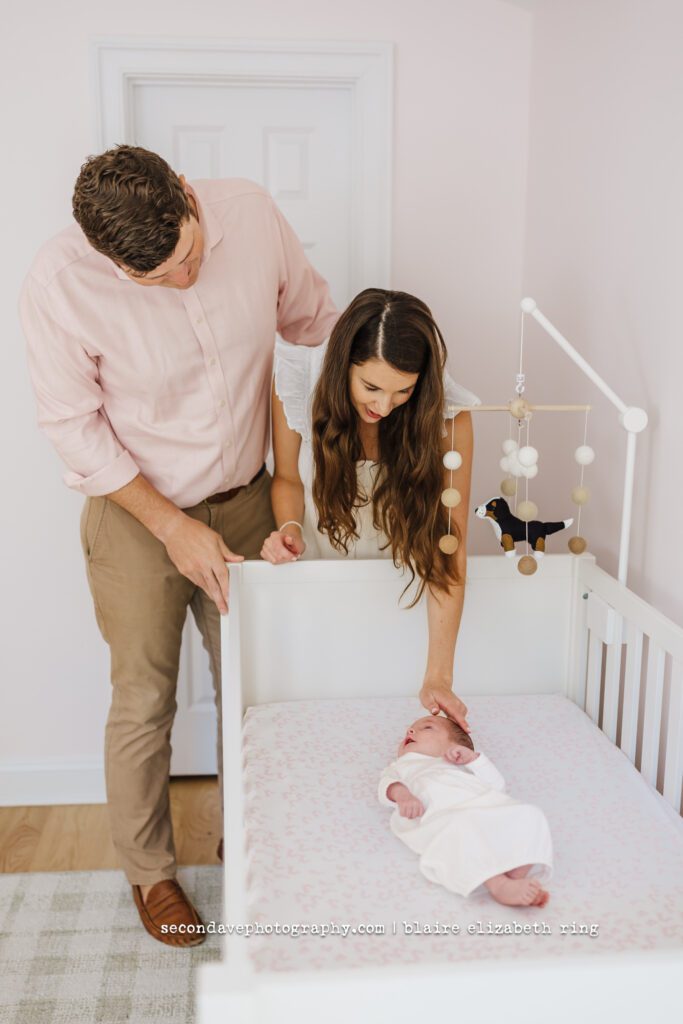
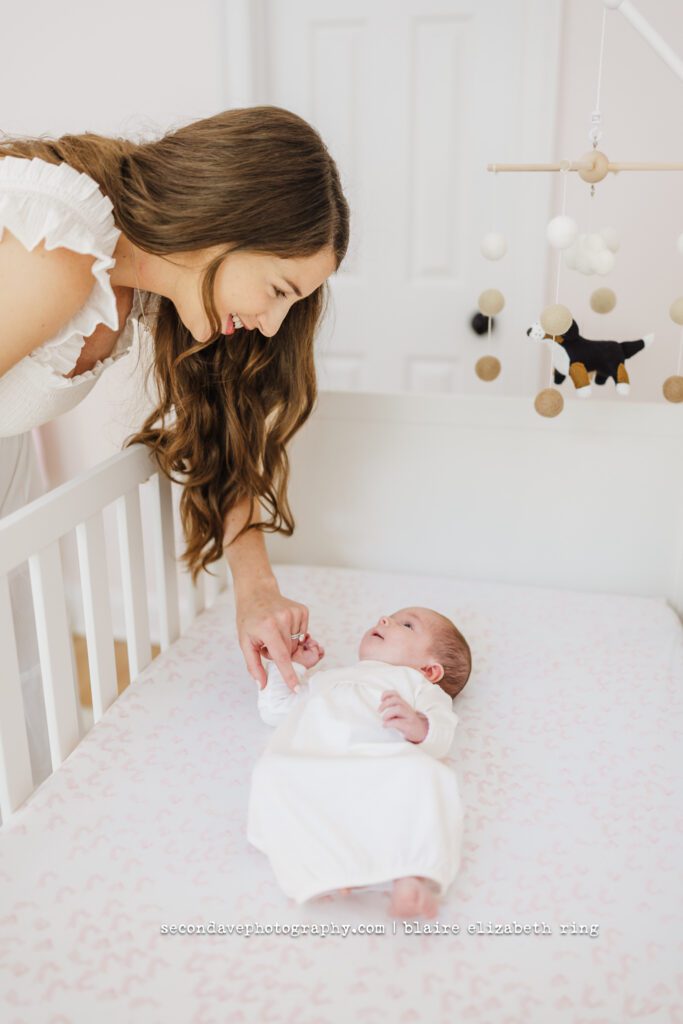
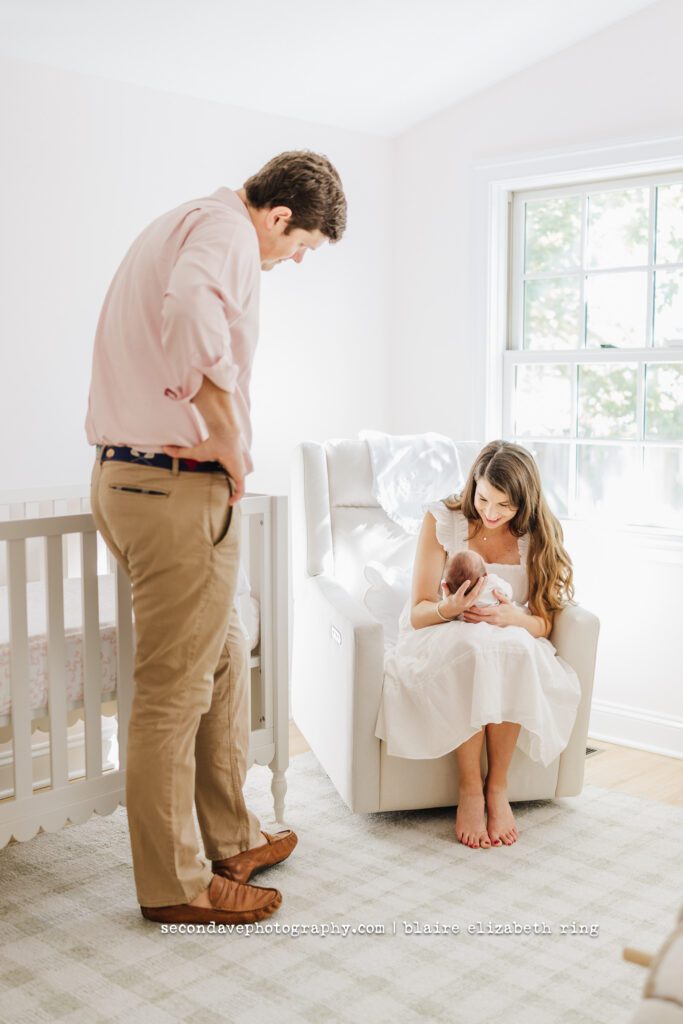
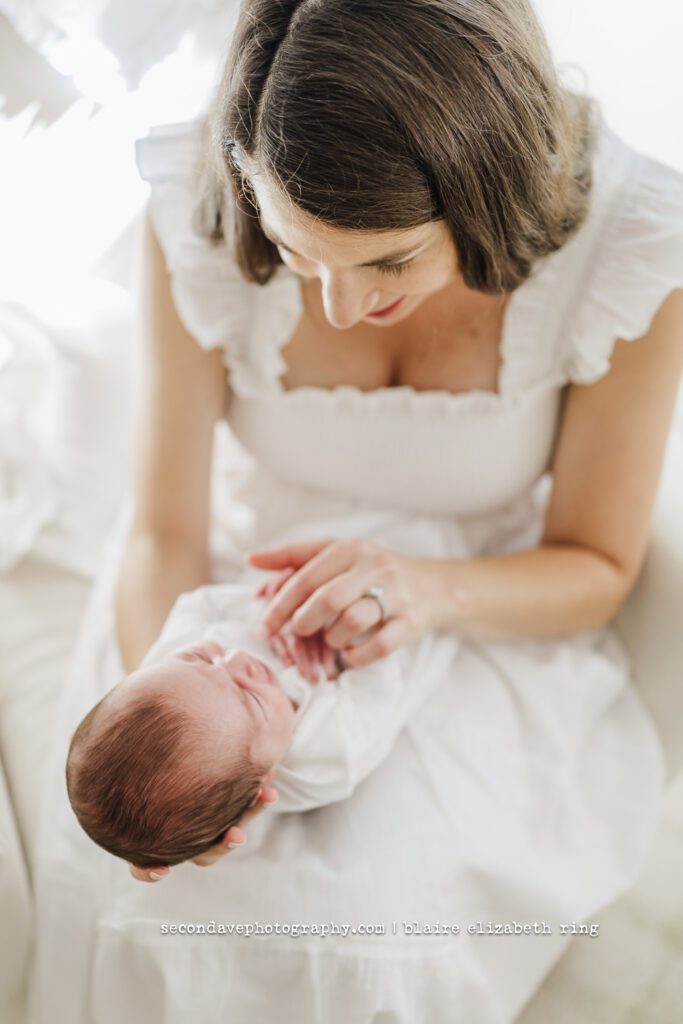
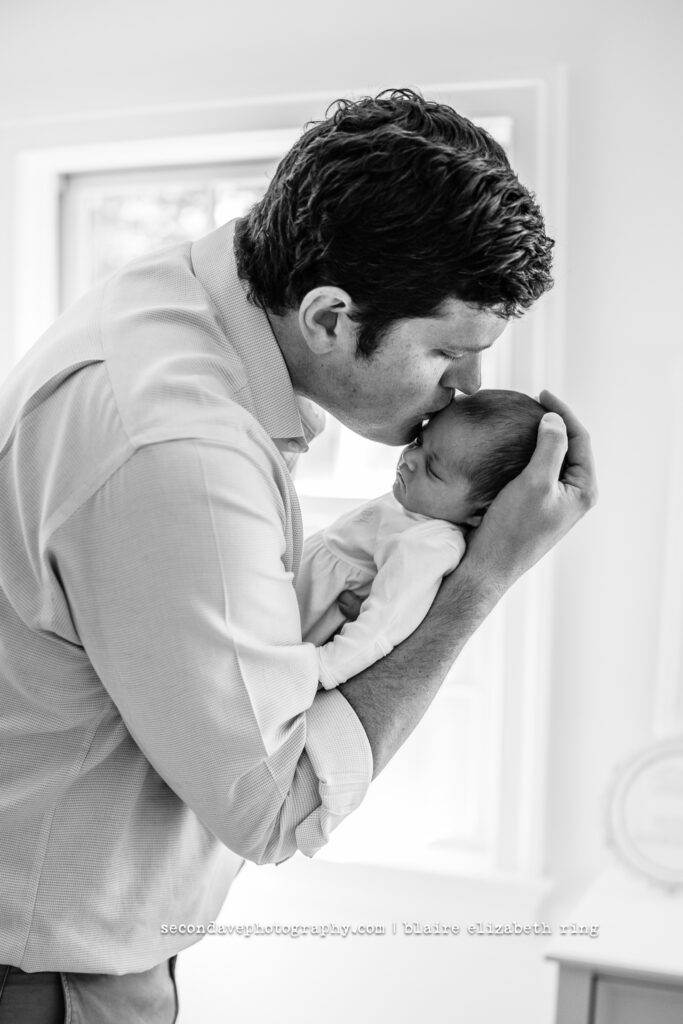
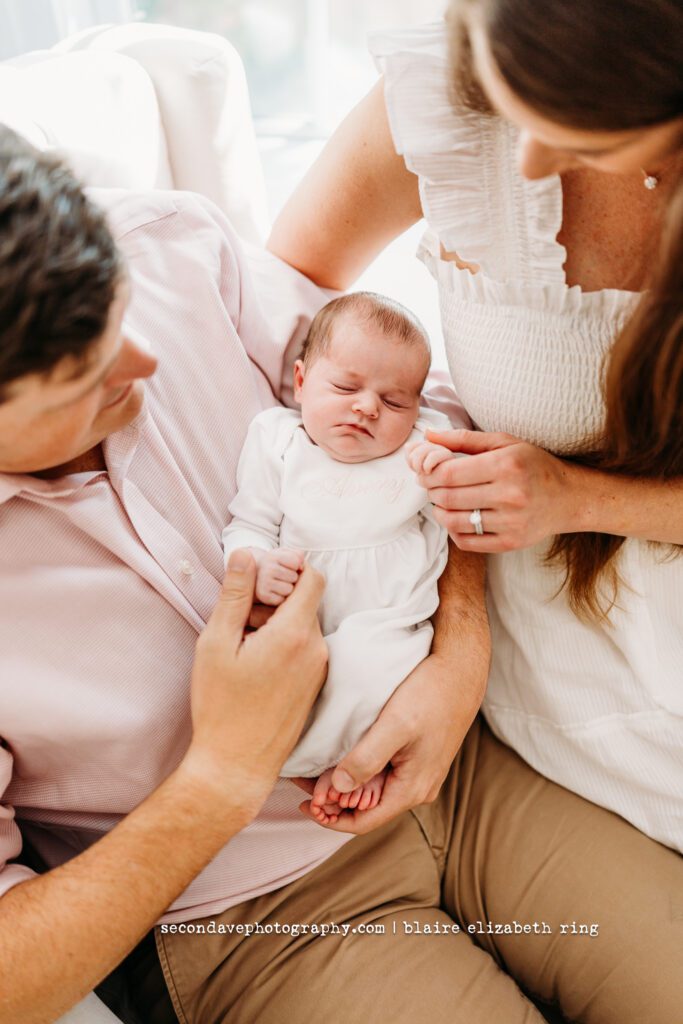
This post features photos from a recent newborn session I did.
Table of Contents
Honoring the Postpartum Body
Congratulations! If you are a new mom (or really any level of mom) you are incredible. Your body just endured 9 months of changes to grow and sustain a life. Isn’t that amazing? That is an absolute super power. Can we just take a moment to bask in the glow of wonder for yourself and your body? I invite you to take a deep breath in and hold love and gratitude for yourself. And then let that breath go with a big sigh. You did it!
Another super power is giving yourself the gift of rest while your body recovers. The sacredness of child birth and the transformative power it has should not be glossed over or quickly forgotten. It took your body 9 months to create life. That’s 273 days, 6,570 hours, and 394,200 minutes. It is perfectly reasonable to give your body adequate time to acclimate to itself and its new surroundings — and this is exactly where postpartum yoga can offer gentle, supportive space for healing.
The Physical and Emotional Reality of the Postpartum Season
Having a newborn is miraculous and wonderful. I have had the gift of raising 2 and it is truly something to behold. But it is hard. Full stop.
It can be overwhelming at times. Your hormones are naturally coming back to a balanced place, your nervous system is activated and on overdrive, and the sleep deprivation can create spikes in cortisol, which is a real-time risk in the development of postpartum depression.
I’ll pause here to name that postpartum depression is normal and it is ok for you to feel however you are feeling. Again, full stop. It is important that we normalize speaking about any uncontrollable sadness, feelings of loneliness, guilt, or inadequacy, negative thought patterns, mood swings, etc. These are common symptoms that I encourage you to not ignore and to speak with a professional about. Accepting help, especially in the newborn stages, not only supports your well-being, but also supports the well-being of that beautiful bundle you just brought home. You are as worthy of the love and care you send and freely give to others.

How Postpartum Yoga Supports Healing
But it’s not just hormones, sleep, and chemical imbalances that you are navigating. Common physical issues after pregnancy can include a wide range of aches and pains, from the neck and back, to pelvic instability, to postpartum sciatica. Gentle, restorative-style yoga practices specifically utilized to rebuild abdominal muscles, rebalance and control pelvic muscles, realign hips, and regain awareness of your own body can not only support your physical comfort and help alleviate pain, but can support your mental and emotional well-being as well. (*Disclaimer – I am not a medical practitioner and encourage you to follow your professional’s advice whenever possible)
When I became a yoga teacher, one of the first continuing education courses I took was on teaching postnatal yoga, because I did suffer from undiagnosed postpartum depression and there are so many useful tools and supports available that we often don’t even know about. Postnatal yoga is about the new-mom journey and prioritizing your well-being, your comfort, and giving you a space to reset in your mind, body, and breath while you make the transition into motherhood.

A Gentle 10-Minute Postpartum Yoga Practice
If you are 6-8 weeks postpartum and have been given the green light by your medical professional to incorporate gentle movement back into your body, here is a simple step-by-step sequence that takes just 10 minutes a day to give your body and mind a little reset! Movements and transitions between shapes should be slow and intentional. There is no rush here!
- Put that little love down safely or hand them over to the most responsible person in the room and get your arms back to yourself.
- Find a room or a space that is away from your little love (if you can safely do so) and where you can spend a few moments alone. Maybe even grabbing earbuds and listening to calming music.
- Find a comfortable position for your body. Lying down, sitting up, propped against the wall. Whatever it is, get cozy for a moment, ensuring that your spine is nice and long.
Breathing Practice – Pranayama (2 minutes)
Set a 2 minute timer
Close your eyes or soften your gaze if that feels safe and supportive.
Start to pay attention to your breath. Watch it come in your body and leave your body, without trying to control it. Just let it flow naturally.
When your mind wanders elsewhere, that’s ok! No judgement here. What a gift to have things to think about! Practice noticing that you are thinking and then lovingly bring your attention back to that steady in and out. Maybe even saying “In” and “Out” as a little mantra to help your mind stay present.
Let your breath start to naturally slow down in the time you are drawing awareness to it and continue coming back to this steady in and out for the remainder of your mini yoga session!
These breathing exercises postpartum are simple but powerful. Why: Slow, steady, intentional breathing activates the parasympathetic nervous system, our rest and digest state of being. This can calm our minds and our bodies.
Mountain Pose – Tadasana (1 minute)
Stand with your back against a wall so you feel supported. With your feet about hip bone distance apart, keep your knees soft as you raise your arms over your head with open palms facing toward one another.
Keep your neck muscles soft and push your shoulder blades downward. Think about keeping your head over your heart and your heart over your pelvis. Standing against the wall can help with this alignment.
Extend your palms toward the ceiling, stretching both sides of your body and gently pull your belly inward.
Hold this position for 30 seconds, breathing deeply and steadily.
Why: This position stimulates the abdomen, pelvis, torso and back
Child’s Pose – Balasana (2 minutes)
You can add Kegel exercises from this position to begin strengthening the pelvic floor.
Option to utilize a couple of blankets and/or pillows/bolsters for more support
Come to your hands and knees and walk your knees wider than your hips, bringing your big toes together with the tops of the feet flat on the ground, if that feels ok in the ankles. You can adjust the position of your knees to support how your body feels. Perhaps using a blanket under the knees as extra padding
Begin to sink your hips back toward your heels and walk your hands forward so your chest and head come toward the ground. You can place a pillow/bolster under the chest and head or use a blanket for a pillow.
If having your forehead face downward impacts your ability to breath deeply, turn your head to one side for 1 minute and then balance the body by turning your head the opposite direction for the next minute.
Why: This is a gentle pose that relieves headaches, pain in the neck and chest, and opens the pelvic floor, hips and lower back.
Cow Face Arms – Gomukhasana Arm Variation (1 minute each side)
Begin in a comfortable seat, perhaps legs criss-crossed.
Reach your right arm toward the ceiling and bend the elbow to bring the palm of your hand to your upper back, just below the neck.
Draw your left hand to the right elbow, creating an anchoring and a bit of a stretch in the shoulders and across the chest
Relax the shoulders downward. Unclench your jaw.
Let your breath be deep and steady
Why: Stretching the shoulders on both sides can help fight the shoulder tilt that occurs after breastfeeding and holding your little love in your arms for long periods of time.
Legs Up The Wall – Viparita Karani (+/- 3 minutes)
You can use a blanket, bolster, or pillow under your tailbone for more comfort and support.
Sit on the floor facing a wall. Lower your shoulders and head to the floor, lying on your side. Then roll onto your back and stretch your legs up the wall, with your feet hip-distance apart. Adjust your feet closer or wider, depending on your body.
Adjust your position by scooting your tailbone toward the wall. It does not need to touch the wall.
Find a comfortable position for your arms at your side, perhaps outward making a T with your body, with palms turned up. Relax your legs against the wall and relax your shoulders, arms, and head toward the ground. Begin to release all effort.
Come back to your steady, deep breaths. Close your eyes or soften your gaze if that feels safe and supportive.
Stay here for as long as you have time for.
To come out of the pose, bend your knees toward your face and roll to your side. Remain on your side for a few breaths before using the strength of your arms to slowly push yourself back up to seated.
***This is a great pose to come back to if you don’t have time for anything else**
An alternative, if this does not feel good in the body, is to lie comfortably on your back.
Why: This is a deeply relaxing pose (for some – trust your body’s cues!) It can help alleviate postpartum swelling in the legs/feet, improve circulation, release low back tension, drain lymph fluid, and calm the nervous system.

Coming Back to Yourself, One Pause at a Time
I genuinely encourage practitioners of all levels to take your time, if you can, to come back into the room and into your surroundings, trying not to startle the nervous system back into its hypervigilant state. If you can, be slow and intentional about how you reenter. Pause. Draw in a deep breath of love and gratitude for yourself, and a deep sigh out. Ahhhh. You did it! You’re a new mom who carved out time for herself and you are amazing!
You can come back to this practice once a day or take pieces of it that feel supportive and incorporate them anytime! I am wishing you so much love and care, calm clarity, and opportunities for reconnection to yourself during this beautiful time of your life. Congratulations again!
Postpartum Yoga: 5 Powerful Tips for Calm and Recovery

Kirsten Shabanowitz is the owner of Kiss of Yoga, LLC and is a RYT-500 Yoga and Meditation Teacher living on un-ceded Piscataway and Manahoac lands, now known as Northern Virginia. She is dedicated to helping you inquire within and develop a connection with your breath and body in a mindful way through yogic practices both on and off the mat.You can find more information, inquire about private sessions, and register for her upcoming classes and retreats by visiting www.kissofyoga.com or following her on Instagram at @kissofyoga.